

Dentures at Caring Dental
Eat, speak and smile with confidence
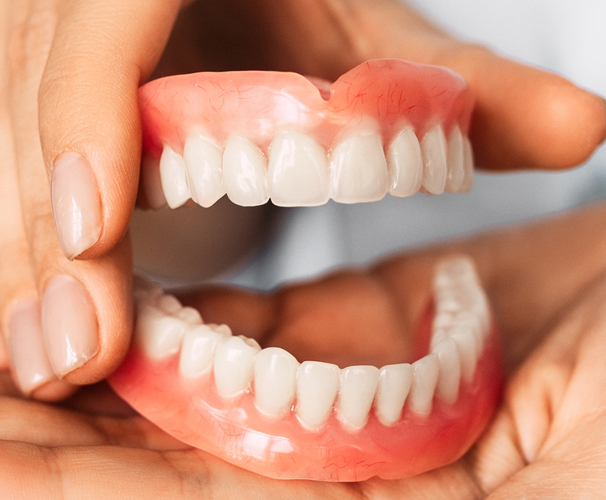
Dentures are removable artificial teeth designed to comfortably fit over your gums, restoring the spaces created by missing teeth.
As well as improving appearance, dentures help to restore chewing function, and enable you to speak clearly and confidently. They can also support any remaining natural teeth and prevent unwanted tooth movements.
Full, partial, and flexible dentures
- Full dentures – replacing all the teeth in one or both jaws.
- Partial dentures – when there is one or more gaps to fill, alongside natural teeth. These are usually made from acrylic (a type of plastic), or can be a ‘chrome’ denture, which has a cobalt-chrome framework with acrylic teeth, Both types provide a strong, durable and comfortable solution.
- Partial flexi-dentures – these can be a good solution when there are suitably positioned natural teeth for the denture to connect to. Made from thin and flexible thermoplastic resins, they tend to be lighter, and more adaptable to the shape and movement of your mouth. This can enhance comfort and fit, and eliminates the need for denture adhesive. The gum-coloured material blends in really well, and since flexi-dentures usually don’t need metal clasps, you can enjoy a more discreet, natural look.
Implant retained dentures
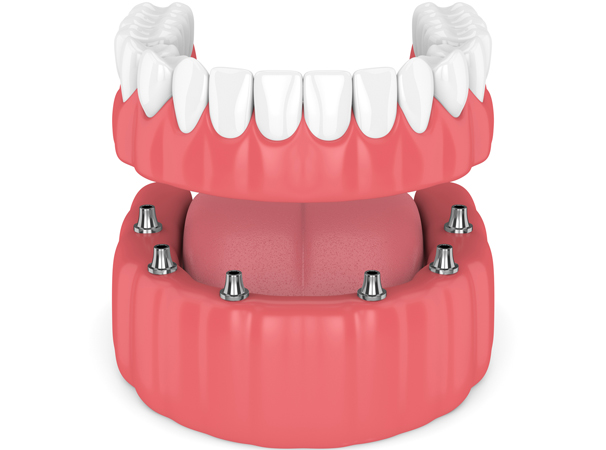
This is an excellent way to improve the stability of dentures when implant bridgework may not be suitable. They are usually suitable when quite a few teeth are missing, or in full denture situations when patients want a more comfortable and secure solution compared to a conventional denture.
They can also be cost-effective compared to implant retained bridges, and can be easily removed for cleaning. Implant retained dentures can be transformative for patients who have worn conventional dentures previously, but struggled with them for some reason.
Three steps to restoring your smile
- Consultation
Following a full examination of your mouth and teeth, your dentist will be able to discuss options for replacing any missing teeth, explaining the pros and cons of the different types of denture. Depending on your particular need or chosen option, this will determine the number of visits needed and the costs involved. - Appointments
This can vary from a simple two-visit process for small partial dentures, to five visits or more for complex, chrome or full dentures. While there are some instances where a traditional putty impression may still be needed, for many dentures we are instead able to use our state-of-the-art intraoral 3D scanner to create a digital record of your teeth and gums. Between visits, each work stage is sent to a high-quality UK dental laboratory, where your denture is custom made for you. - Fitting
When all the preparatory stages have been completed, your dentist will demonstrate how to fit and remove your new dentures, how to wear and use them, and tips on getting used to them to ensure they remain comfortable.
You’ll also be shown how to care for your dentures, including regular cleaning and maintenance to prevent the build-up of debris and bacteria.
The right option for you
- As with every dental treatment or restoration, it is important to choose the right option for your dental needs and budget. There are pros and cons to different solutions and materials, which your dentist will be happy to discuss with you.
- Dentures are a good option for replacing missing teeth, but you may also wish to consider a bridge or dental implants. Again, your dentist can talk through the benefits, suitability and costs.
- If a front tooth has been lost, dentures can sometimes be beneficial as a short-term option prior to having implants or bridges.
Dentures FAQs
Because teeth support each other, and work together, it is usually beneficial to replace any missing teeth. Gaps can cause unwanted movement of the remaining teeth, and bone loss in the jaw. These issues can lead to changes in your bite, your ability to chew normally, and new gaps which lead to food trapping, increasing the chances of decay. Gaps can also lead to gum inflammation, infection, and potential bone loss.
For new dentures it is quite normal to have a settling in period. Quite commonly, the gums aren’t used to having a denture sitting on them so they can become sore. If a particularly sore spot forms under the denture, then stop wearing them, and book a follow-up appointment with your dentist. It is advisable to pop them back in about 24 hours before the appointment so any sore spots can be easily identified, and the denture can then be eased over these spots.
If the denture is too loose or too tight, again, discuss this with your dentist at a follow-up visit to see if any simple adjustments to the denture or any clasps can be made.
It is normal to experience some slight change to your speech or some lisping. This usually improves within a few days, so practise talking aloud at home or singing to allow the cheeks, lips and tongue to all adapt. If you are still struggling, please arrange a follow-up visit to discuss any concerns with your dentist.
Your dentist will provide specific advice, but it is advisable to clean carefully with cold running tap water, over a sink with some water already in it, so that if the dentures are dropped, they land on the water and not the hard surface of the sink. As strange as it sounds, using some liquid soap and a soft denture-specific brush can work wonders. Most patients tend to use toothpaste, but please be careful, as some can tend to be a bit abrasive, which over time can slightly abrade the smooth polished surface of the denture acrylic.
Denture cream can be a good alternative and is designed for this purpose. Finally, denture cleaning tablets which are dissolved in warm water can be beneficial, but always follow the instructions carefully as they may not be suitable for metal chrome dentures.
Booking your dentures consultation
If you have missing teeth, and would like to restore your smile, our dentists would be pleased to see you for an initial assessment and to discuss suitable treatment options with you. We will always endeavour to give you the best possible care, to suit your individual needs and budget.
Please call our friendly reception team on 01689 664600 to arrange an appointment, or use our online booking system.
Interest-free payments
If you would like to spread the cost of your treatment, find out more about our interest-free payment option. Our friendly reception team will be happy to help if you have questions or need assistance completing the application.